
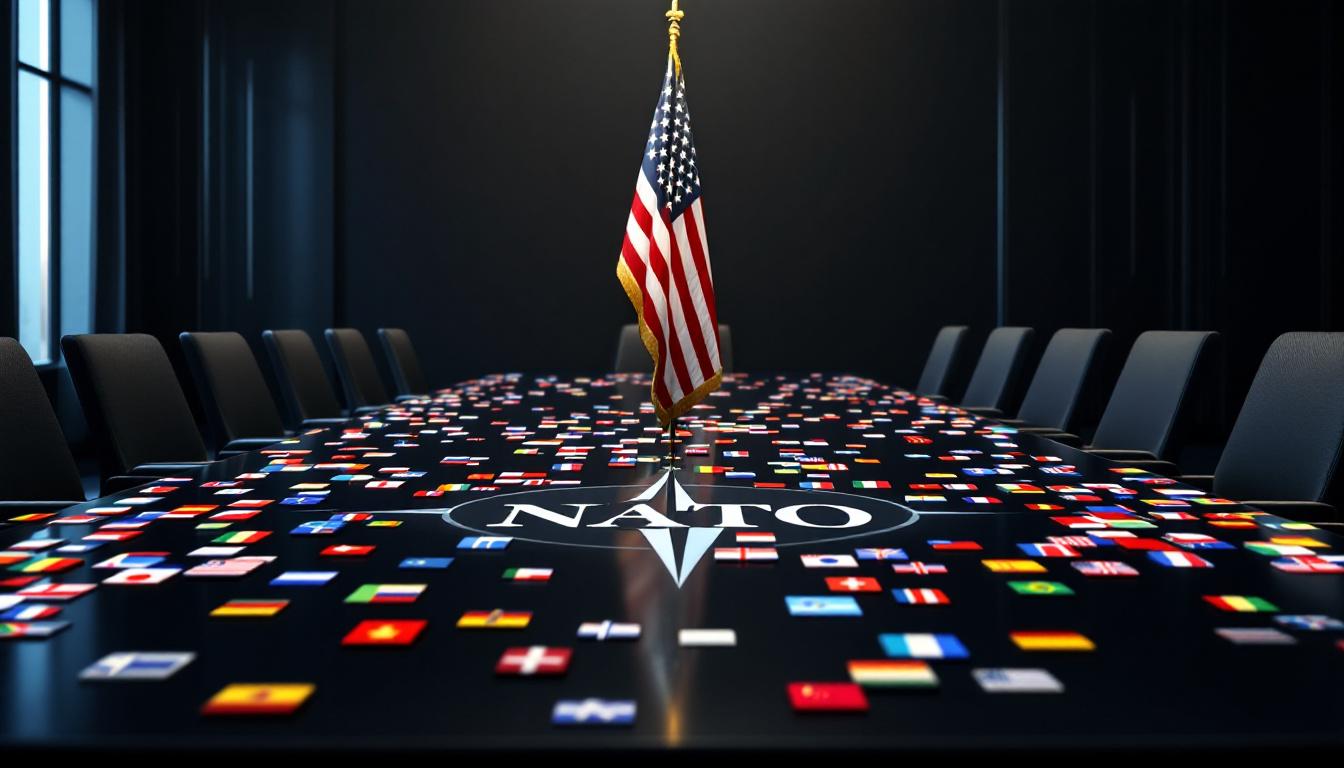
We spend roughly $900 billion a year on national defense. We station troops in Germany, Japan, South Korea, Italy, Spain, and about forty other countries whose names half of Congress can’t even pronounce. We underwrite the security of the entire Western world, and we’ve been doing it since your grandfather was in short pants. So when things finally get hot in the Middle East — when the Strait of Hormuz gets shut down and gas prices start climbing toward numbers that make your mortgage payment look reasonable — you’d think our quote-unquote “allies” might pick up a phone and say, “Hey, how can we help?”
You would be wrong. Spectacularly, almost impressively wrong. Because what our allies actually did was bolt the door, turn off the porch light, and pretend they weren’t home. Spain said American jets can’t use their bases at Rota and Morón. Italy said our bombers can’t land at Sigonella in Sicily — a base we’ve been operating out of since the Cold War. And when President Trump called out Japan, Australia, South Korea, and the entire NATO alliance at his Monday press conference for sitting on their hands, not a single one of them had the decency to look embarrassed about it.
Let’s be crystal clear about what happened here. Spain’s defense minister — a woman named Margarita Robles — didn’t just quietly decline to help. She announced, publicly and proudly, that Spanish bases and Spanish airspace were off-limits for anything related to operations in Iran. Prime Minister Pedro Sánchez doubled down and condemned the strikes entirely. This from a country whose entire southern coastline we’ve been protecting from North African threats for decades. You’re welcome for that, Pedro.
Italy played a slightly different game. Italian Defense Minister Guido Crosetto confirmed that American bombers heading toward Iran were turned away from Sigonella because they “hadn’t been granted authorization.” Then the Italian government scrambled to clarify that there were “no tensions” with Washington and that each request would be handled “on a case-by-case basis.” Translation: we didn’t want to help, but we also don’t want you to stop protecting us. Have your cake, eat it too, and charge the American taxpayer for the fork.
Trump was characteristically blunt about it. “Japan didn’t help us. Australia didn’t help us. South Korea didn’t help us,” he told reporters. Then he got to NATO, and he didn’t hold back. He called the alliance a “paper tiger” — and for once, every honest person on Earth had to admit he was right. Secretary of State Marco Rubio went further, saying the administration would “have to reexamine the value of NATO” if this is how our partners behave when it actually matters.
Here’s the thing that should make every American’s blood boil. We didn’t start this war for fun. Iran closed the Strait of Hormuz — the chokepoint through which roughly 20 percent of the world’s oil supply passes every single day. That doesn’t just affect American gas prices. It affects European gas prices. It affects Japanese energy imports. It affects every country on Earth that depends on Middle Eastern oil. This is everybody’s problem, but apparently only America’s responsibility.
And these aren’t small, broke nations we’re talking about. Japan has the fourth-largest economy on the planet. Germany is an industrial powerhouse. South Korea builds warships that would make half the world’s navies jealous. Australia has a military that punches well above its weight class. They can help. They just don’t want to, because they’ve spent eighty years learning that Uncle Sam will always show up with the aircraft carriers whether they pitch in or not.
Trump put it perfectly when he told NATO: “You’ll have to start learning how to fight for yourself. The U.S.A. won’t be there to help you anymore, just like you weren’t there for us.” Now, will he actually follow through on that? History suggests probably not — we’ve been making this threat since the 1990s and we always come crawling back. But the fact that European and Asian allies are willing to bet the entire Western security architecture on America’s patience lasting forever is a level of arrogance that would impress even a French diplomat.
We protect South Korea from a lunatic with nuclear weapons. We protect Japan from China’s increasingly aggressive military posture. We protect Europe from a Russia that already invaded Ukraine. We do all of this at staggering cost to our own taxpayers, and when we ask for so much as a landing strip — literally just a piece of flat pavement — they say no.
The next time any of these countries lectures us about “multilateralism” or “the rules-based international order” or whatever phrase they trot out at the UN General Assembly to sound important, just remember this moment. Remember that when American pilots were flying combat missions over Iran, our allies locked the gates and went back to brunch.
Alliances are supposed to be two-way streets. Right now, we’re driving both lanes while our partners sit in the passenger seat complaining about the music.