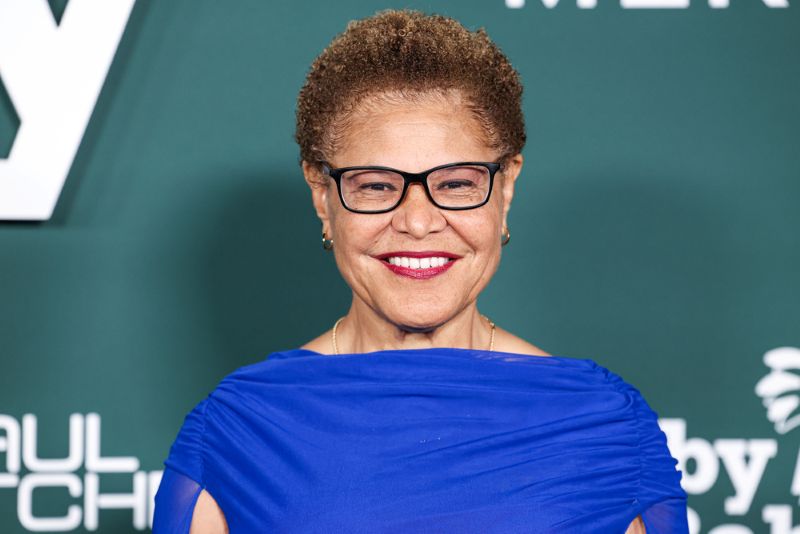
Los Angeles Mayor Karen Bass is facing a fresh wave of outrage after a bombshell report suggested she quietly intervened to soften official findings about the city’s disastrous response to the deadly Palisades Fire—an intervention that critics say looks a lot like an attempt to bury accountability.
According to a new report from the Los Angeles Times, Bass personally reviewed an early draft of the Los Angeles Fire Department’s after-action report and pushed to have some of its most damaging conclusions removed or watered down before the public ever saw it. Those conclusions reportedly detailed serious departmental failures that may have contributed to one of the most destructive fires in California history.
The Times reports that Bass warned then-interim Fire Chief Ronnie Villanueva that releasing the report as written could expose the city to legal liability. Sources told the paper that Bass was cautioned internally that interfering with the report would be a “bad idea” and could come back to haunt her politically. Despite those warnings, the mayor allegedly delayed the public release of the report until revisions were made.
When the final version was released in October, a key section was missing.
The original draft reportedly faulted the LAFD for failing to fully staff and pre-deploy all available crews ahead of the fire—even though forecasts had warned of catastrophic winds. That finding mattered, because it suggested the disaster was not simply an act of nature, but the result of policy decisions made by the city.
That section never made it into the final report.
Instead, the official version praised department leadership for going “above and beyond” using a standard “pre-deployment matrix,” a striking shift in tone given the outcome. The January 2025 Palisades Fire killed 12 people, destroyed thousands of homes and structures, and caused an estimated $150 billion in damage. For many Angelenos, reading praise where they expected accountability felt like a slap in the face.
Current Fire Chief Jaime Moore later confirmed that the report had, in fact, been altered. During a Jan. 7 briefing, Moore acknowledged that multiple drafts were edited to blunt criticism of leadership.
“As many of you are aware, it is now clear that multiple drafts were edited to soften language and reduce explicit criticism of the department leadership in that final report,” Moore said, without naming who ordered the changes.
Bass, for her part, has flatly denied any involvement. But sources quoted by the Times directly contradict that claim.
“The mayor didn’t tell the truth when she said she had nothing to do with changing the report,” sources told the outlet.
Bass’ office responded with a full-throated attack on the reporting itself.
“This is muckraking journalism at its lowest form,” the mayor’s office said in a statement. “It is dangerous and irresponsible for Los Angeles Times reporters to rely on third-hand unsourced information to make unsubstantiated character attacks to advance a narrative that is false.”
Bass later doubled down in an interview with KNX News, calling the report “absolutely false, 100%.”
“Just think about it for a minute,” Bass said, according to the Los Angeles Daily News. “I’m the one who ordered the after-action report when the fire chief would not do it. I fired her.
‘Why would I water down a report that essentially presented the information for why I fired her? That makes no sense.’”
To many residents, however, that explanation raises as many questions as it answers—especially given the timing, the missing sections, and the city’s massive exposure to lawsuits from victims who lost loved ones and homes.
The controversy lands on top of already mounting criticism of Bass’ leadership during the Palisades Fire, including confusion over evacuation orders, her absence from the country when the blaze erupted, and nearly $18 million in fire department budget cuts made before the disaster.
Whether Bass’ actions cross a legal line will ultimately be up to investigators and courts. But politically, the damage is already done. In a city still grieving and rebuilding, the idea that the mayor may have massaged an official report to protect City Hall—rather than tell the full truth—has only deepened public anger.
For many Angelenos, this isn’t just about a report. It’s about whether their leaders can be trusted to tell the truth when lives are lost—and whether accountability in Los Angeles stops at the mayor’s office door.