
Sixty-six years. That’s how long the Cuban people have suffered under the boot of communist tyranny. And now, thanks to President Donald Trump, the Castro regime is finally gasping for air like a guy who just realized his oxygen tank was made by a government-run factory.
Somebody get the Castros a flashlight. They’re going to need it.
Trump dropped the hammer at his “Shield of the Americas” summit in Doral, Florida over the weekend, telling a room full of Latin American leaders that Cuba is “in its last moments of life.” His exact words: “They have no money, they have no oil. They have a bad philosophy, they have a bad regime that’s been bad for a long time.”
That might be the most accurate three-sentence summary of communism ever spoken aloud.
Here’s what happened. After we kicked Maduro out of Venezuela earlier this year, Cuba lost its sugar daddy. Venezuela had been propping up the island with cheap oil for years — basically picking up where the Soviet Union left off in 1991. Trump then signed an executive order threatening tariffs on any country that sells oil to Cuba. Mexico took one look at that and said “Adios, Havana.” Oil shipments: gone.
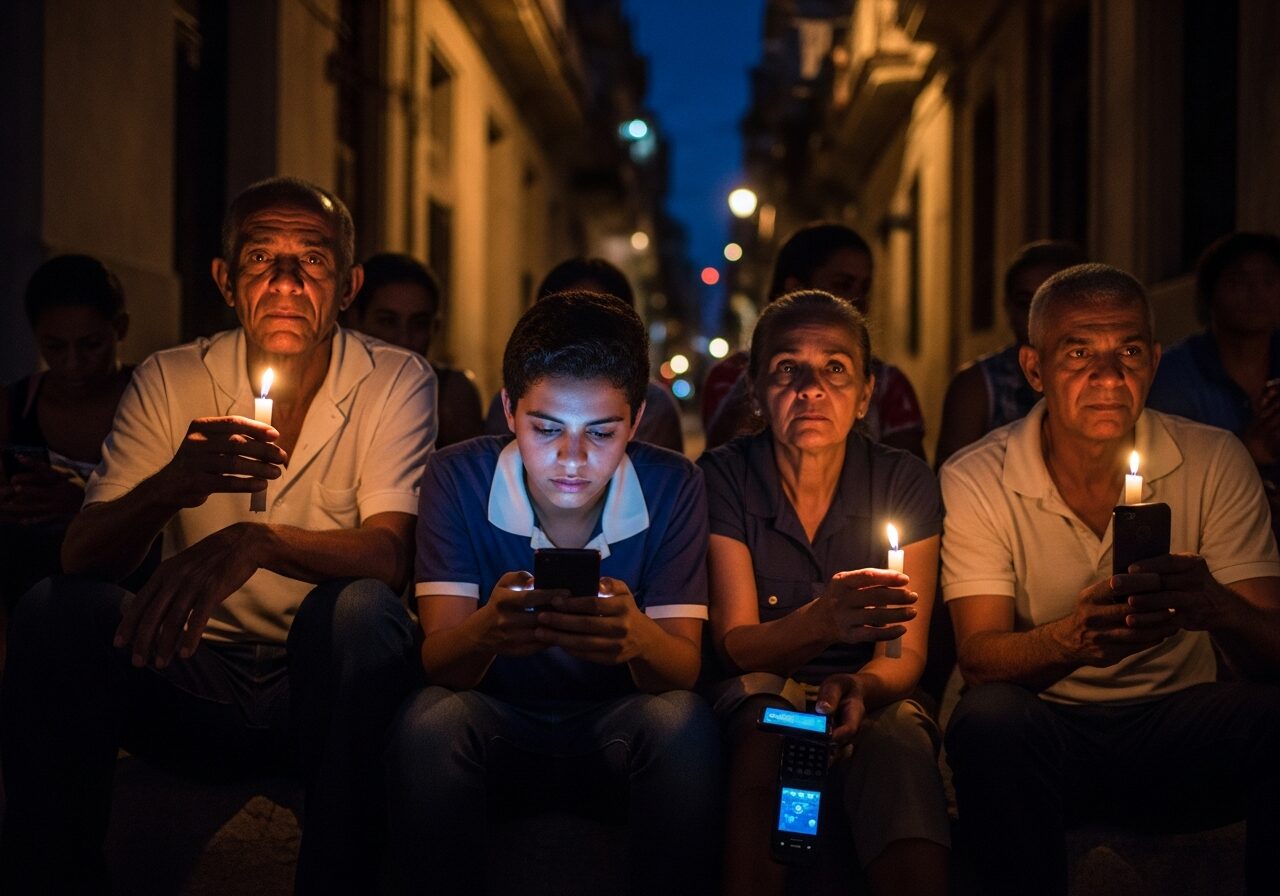
The result? Blackouts stretching more than 60 hours. Havana residents banging pots and pans in the streets, shouting “Electricity and food!” and “Freedom!” — which is basically the one-star Yelp review for communism.
And who did Trump assign to negotiate with the dying regime? Secretary of State Marco Rubio — a Cuban-American whose family fled the island to escape the very government he’s now being sent to dismantle. You cannot write a better script than this.
Rubio isn’t even bothering to call Cuba’s “president,” Miguel Diaz-Canel. (The man’s basically a mannequin propped up in a chair while the Castro family runs things from behind the curtain.) Instead, Rubio’s in direct talks with Raul Castro’s 41-year-old grandson, Raul Guillermo Rodriguez Castro. Even Washington knows the “official” government is decoration.
Trump was asked about a “friendly takeover.” He didn’t say no.
Cuban-American Congresswoman Maria Elvira Salazar had a message for the regime after the protests: “Be careful. Don’t mess with the Cubans.” That’s the energy. Sixty-six years of communist misery, and the Cuban people are finally close enough to freedom to taste it.
The Left, of course, is already sobbing about the US “strangling” poor little Cuba. Spare us. These are the same people who spent six decades wearing Che Guevara t-shirts while actual Cubans were eating their pets and dodging secret police. Where was your “humanitarian concern” when the Castro brothers were running a prison island 90 miles from Miami? Now that the regime is collapsing? Suddenly it’s our fault. (Funny how that works.)
Where This Is Going
People keep comparing this to the fall of the Berlin Wall. It’s actually closer to something most Americans have forgotten — Cuba’s own near-death experience in the 1990s.
When the Soviet Union collapsed in 1991, Cuba lost its lifeline overnight. Soviet subsidies had been running about $4.3 billion a year — more than a fifth of Cuba’s entire GDP. Soviet oil shipments cratered from 13 million tons to under 2 million in three years. Cuba’s economy shrank 35%. Imports crashed 80%. People were eating cats. (Communism — where pets become protein.)
The regime survived that. Barely. You know who bailed them out? Hugo Chavez and Venezuela, starting in the early 2000s, with cheap oil and cash. Cuba swapped one sugar daddy for another and limped along for two more decades.
Now do the math on 2026. Venezuela? Gone — we removed Maduro. Mexico? Cut off by Trump’s tariff threat. Cuba produces about 30,000 barrels of oil per day but burns through 112,000. That’s an 82,000-barrel-per-day hole with nobody left to fill it. In the ’90s, they had time to find a new benefactor. This time? China and Russia have made noise about helping, but neither has shipped a single tanker. Ninety miles from the US Coast Guard tends to focus the mind.
Here’s what Rubio going directly to Castro’s grandson really means. He’s not negotiating with the Cuban government. He’s negotiating with the Cuban family. Washington has already written off Diaz-Canel and the “official” communist party apparatus — they consider it dead on its feet. The message to the 41-year-old grandson is pretty clear: “You can be the guy who transitions Cuba into the modern world, or you can be the guy holding the bag when the generators run out of diesel for good.”
The smart money says some version of a deal gets done. The Castro inner circle gets security guarantees and quietly keeps some money. Diaz-Canel gets a nice letter thanking him for his “service” and a one-way ticket to irrelevance. (“Congratulations, Miguel! You’ve been promoted to Former President. Your new office has a lovely view of nothing.”) Cuba opens up. And the last Soviet-era communist outpost in the Western Hemisphere — 90 miles from Key West — stops being a welcome mat for Chinese and Russian intelligence operations in our backyard.
Mark my words: before this year is out, Marco Rubio — the son of Cuban immigrants who fled communist oppression — will have personally negotiated the end of the regime his parents escaped. If that doesn’t make you proud to be an American, check your pulse. And if you’re a communist reading this from your “worker’s paradise” with no electricity? Bang your pot a little louder. Help is on the way.