
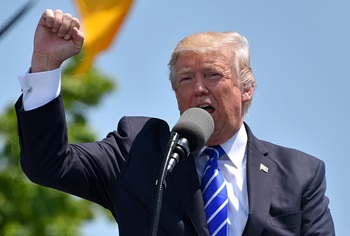
Trump spent three days teasing it. “A big gift from Iran,” he kept saying, grinning like a man who already knows the answer. The media spent those three days guessing — a prisoner exchange? A ceasefire signal? A back-channel diplomatic breakthrough?
It was oil tankers.
Eight to ten of them. Large crude carriers, allowed through the Strait of Hormuz by Iran — the same strait that’s been disrupted since the war started, the same chokepoint that sent your gas prices north of $4 a gallon, the same passage that handles 20 percent of the world’s oil supply.
Trump didn’t call it a gift rhetorically. He called it a gift because that’s exactly what it is.
The media reported this as a curiosity. Trump being theatrical. A vague diplomatic gesture from Iran with unclear significance.
Here’s what it actually means: Iran blinked.
Letting tankers through isn’t a press release — it’s a physical act with physical consequences. Those tankers carry crude oil. Crude oil gets refined into gasoline. When supply increases, prices fall. The timing from tanker movement to price at the pump runs about three to four weeks.
Iran didn’t announce this. They didn’t hold a press conference. They issued no statements about tankers or concessions or goodwill gestures. They just let the ships through. That’s the tell.
When Iran wants to dig in, they give speeches. When they want out, they move quietly and let the actions speak. Eight to ten large tankers moving through the Strait of Hormuz — without a word of explanation — is the quietest kind of retreat.
Trump saw it. He announced it. The press is treating it like a curiosity. It isn’t.
Every major Strait of Hormuz crisis in modern history has ended with the Strait reopening. The 1987-88 Tanker War — when Iran was attacking oil tankers during the Iran-Iraq war — lasted over a year. The Strait eventually reopened. Oil recovered. The crisis that felt permanent turned out to be temporary.
The pattern is consistent across forty years of dealing with Iran. They escalate, they absorb military and economic pressure, and then they find a face-saving off-ramp. The face-saving part is critical to understand. Iran cannot publicly concede. Their domestic politics won’t allow it. So they retreat in practice while protesting in public — foreign minister on state TV declaring talks are impossible, tankers quietly moving through the Strait in the background.
That’s not contradiction. That’s how Iranian diplomacy works. It always has.
Eight to ten tankers is the beginning of that off-ramp, not the end of the story.
Trump set an April 6 deadline. He extended it twice. Both extensions were deliberate — they signaled he preferred negotiation to a second phase of strikes, which gave markets time to stabilize and gave Iran political room to maneuver without looking like they caved under American guns.
The tankers are what maneuvering looks like when you’re Iran.
If this holds and expands — more tankers, then fuller Strait access — the economic dominoes fall in sequence: oil supply increases, crude prices drop, gas prices follow three to four weeks later, and the April economic picture looks completely different from the March one. The “everything is broken” narrative that’s been driving the scary headlines collapses when the underlying driver — the Hormuz closure — starts to lift.
Trump’s critics spent two weeks calling his deadline extensions weakness. The tankers suggest he understood the leverage better than they did. Pressure worked. The April 6 deadline created the conditions. Iran is now looking for the exit.
The gift was real. The question now is how big it gets.